

Introduction
Selecting, installing, or operating a compactor incorrectly can result in:
- Increased hauling costs
- Reduced equipment life
- Poor compaction performance
- Safety risks and compliance issues
Whether you are specifying equipment, managing operations, or purchasing for the first time, understanding these common mistakes can help you avoid unnecessary costs and maximize long-term performance.
1. Under sizing the Compactor
Selecting a compactor that is too small for your waste volume leads to:
- Overflowing containers
- Increased haul frequency
- Higher disposal costs
Compactors must be sized based on volume, material type, and frequency of waste generation, not just initial budget.
* Proper sizing is a core part of system selection and performance planning
2. Ignoring Material Type
Not all waste behaves the same.
- Dry cardboard vs wet waste
- Loose trash vs dense industrial scrap
- Bulky items vs uniform material
Choosing equipment without considering material characteristics often results in poor compaction and inefficient operation.
3. Choosing a Compactor Instead of a Baler (or Vice Versa)
A common early mistake:
- Compactors — for mixed waste and disposal
- Balers — for clean recyclables and resale
Using the wrong system can mean:
- Lost recycling revenue
- Increased disposal costs
4. Not Using a Pre-Crusher for Bulky Waste
Bulky materials like:
- Pallets
- Drums
- Crates
- Large packaging
…trap air space and reduce payload.
Pre-crushers break down these materials before compaction, significantly increasing container utilization.
* Pre-crushers are designed specifically to handle difficult and bulky materials and improve payload efficiency
5. Underestimating Required Compaction Force
As material compresses, it becomes harder to compact further.
- Shorter, denser material columns require significantly more force
- Insufficient force leads to partially filled containers
* The compaction process requires increasing force as material densifies
This is why higher-force or dual-cylinder systems can dramatically improve performance.
6. Poor Site Planning and Installation
Improper installation can lead to:
- Misalignment with containers
- Increased wear and jamming
- Unsafe operating conditions
Key considerations include:
- Level concrete pads
- Proper anchoring
- Correct container alignment
* Improper leveling or anchoring can cause premature wear and operational issues
7. Ignoring Safety Requirements
Compactors are powerful machines and must be operated safely.
Common issues:
- Missing guards or barriers
- Improper access control
- Unsafe operator positioning
* Safety standards (OSHA / ANSI) require proper guarding, interlocks, and safe operation procedures
8. Lack of Preventive Maintenance
Running equipment until failure leads to:
- Expensive repairs
- Unexpected downtime
- Reduced equipment lifespan
A structured maintenance program helps:
- Identify issues early
- Maintain efficiency
- Extend service life
* Preventive maintenance reduces cost and extends equipment life
9. Improper Operator Training
Untrained operators can:
- Overload equipment
- Use improper materials
- Create unsafe conditions
Training ensures:
- Safe operation
- Proper usage
- Early detection of issues
* Operator training is critical to safe and efficient equipment use
10. Not Optimizing for Payload and Haul Reduction
One of the most overlooked cost drivers:
— Hauling air instead of material
Low-density loads mean:
- More hauls
- Higher transportation costs
Increasing compaction force improves payload and reduces hauling frequency.
* Higher compaction force increases container payload and reduces transport cycles
Conclusion
Avoiding these common mistakes ensures that your compaction system:
- Performs efficiently
- Meets safety requirements
- Minimizes total cost of ownership
- Delivers long-term reliability
For a deeper understanding of compactor design, selection, and performance, explore the Engineering & Selection Center.
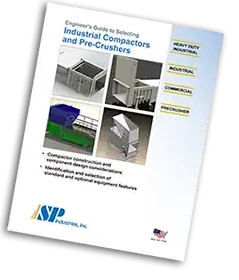
Engineers Guide to Selecting Industrial Compactors and Pre-Crushers
- Functional comparisons
- Construction designs
- Sizing and selection
- Structural, control & power unit design features